Any CASA system has to demonstrate a high degree of 'parity' with measurements made by the haemocytometer as 'gold standard'. This is not the same as correlation - any manufacturer of a sperm counting device which only shows correlation with the gold standard should be disregarded and must demonstrate sample-by-sample comparison.
Fundamentally, if a CASA cannot count sperm properly, there are implications for the evaluation of other parameters as it reflects the inability to accurately identify objects under the microscope.
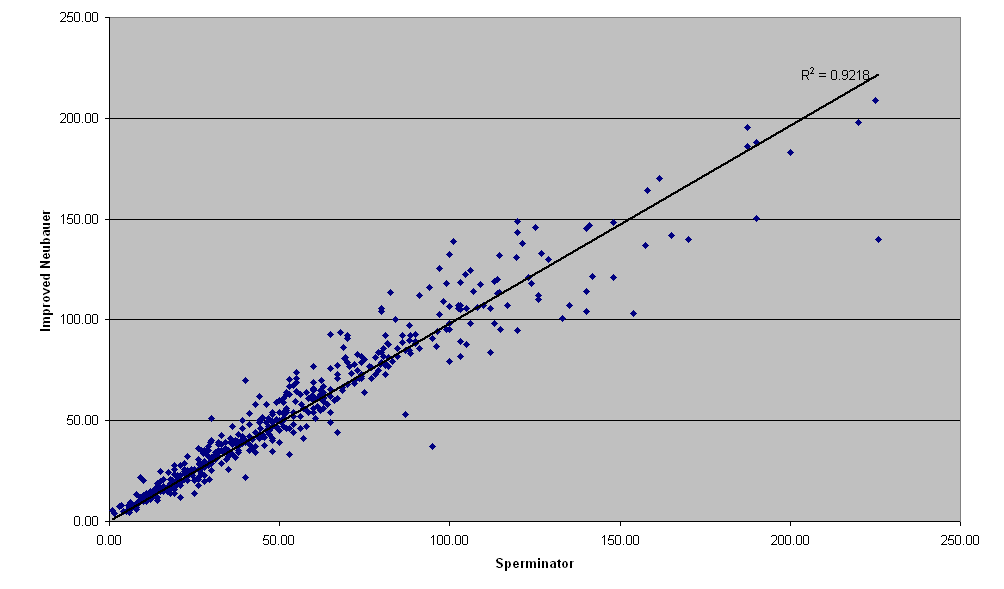
During validation, not every measurement will turn out the same for both methods, just as they do not when you provide repeated haemocytometer readings. There are inherent errors associated with most methods which cannot be avoided. This is why we suggest that any unit trying to validate its CASA against the haemocytometer follows strict guidelines for reducing error and makes use of the protocols listed in the WHO manual.
Any taking of shortcuts or use of an alternative chamber to the haemocytometer will not be appropriate for validation purposes.
We are under no illusions that this is difficult since there is no traceable standard which we may use as a basis for calibration. If motility grades are to be based on swimming speeds, then using the video each sperm's track length can be verified against a calibrated scale.
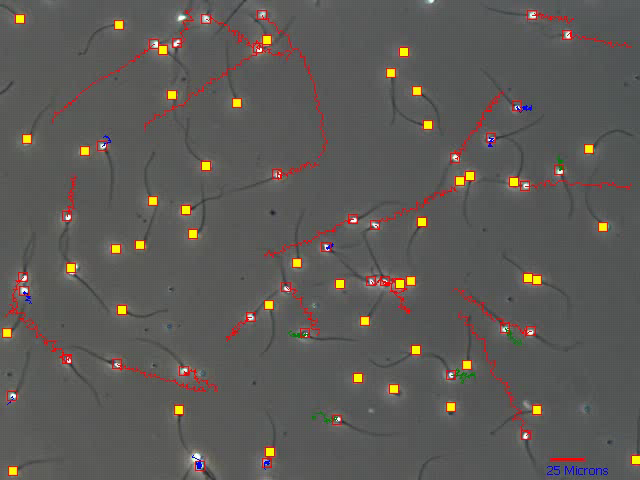
The still image above represents a 1-second video loop that can be played to verify track length against the 25 micron scale (bottom right).
Highly repeatable sperm concentration data over an 8-year period demonstrates SAMi's reliability:
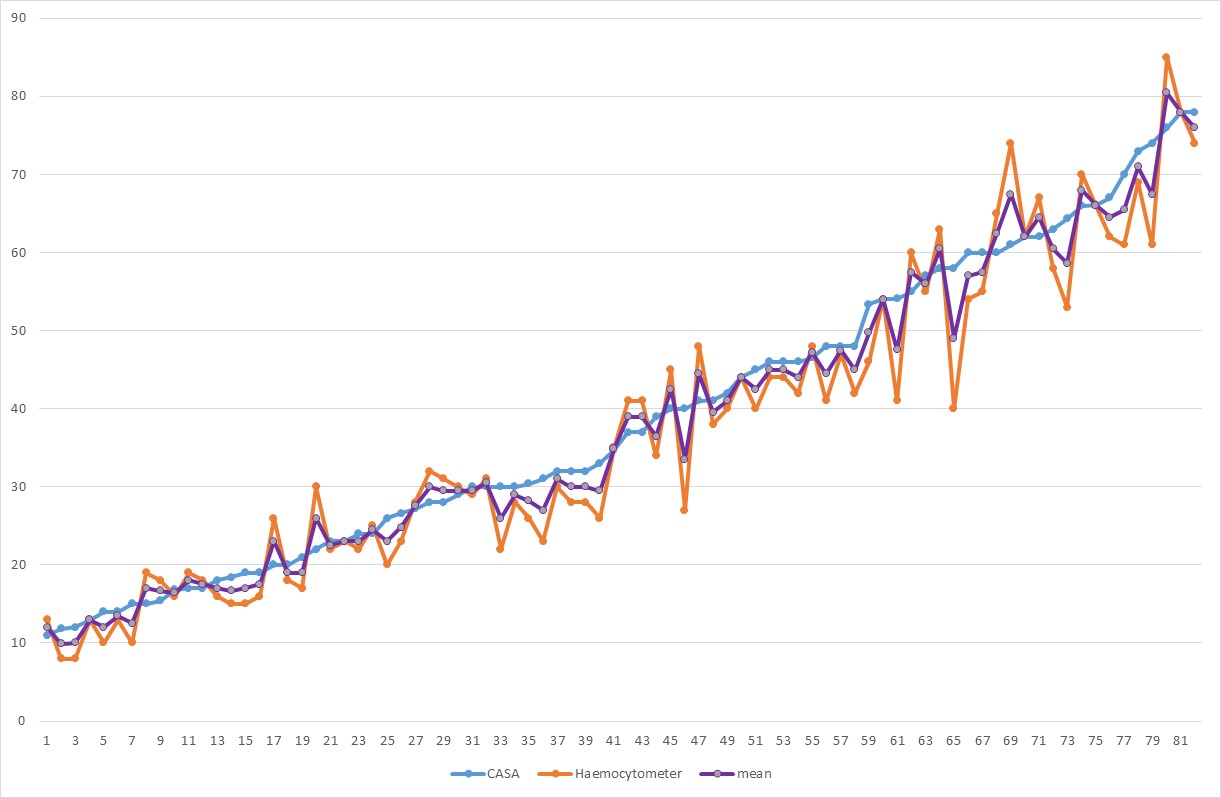
For laboratories wishing to validate their SAMi system, we provide a comprehensive validation protocol:
Download Validation Protocol PDF
As with any method of laboratory analysis, there are always limitations with CASA. Understanding these will help users get the best out of the system.
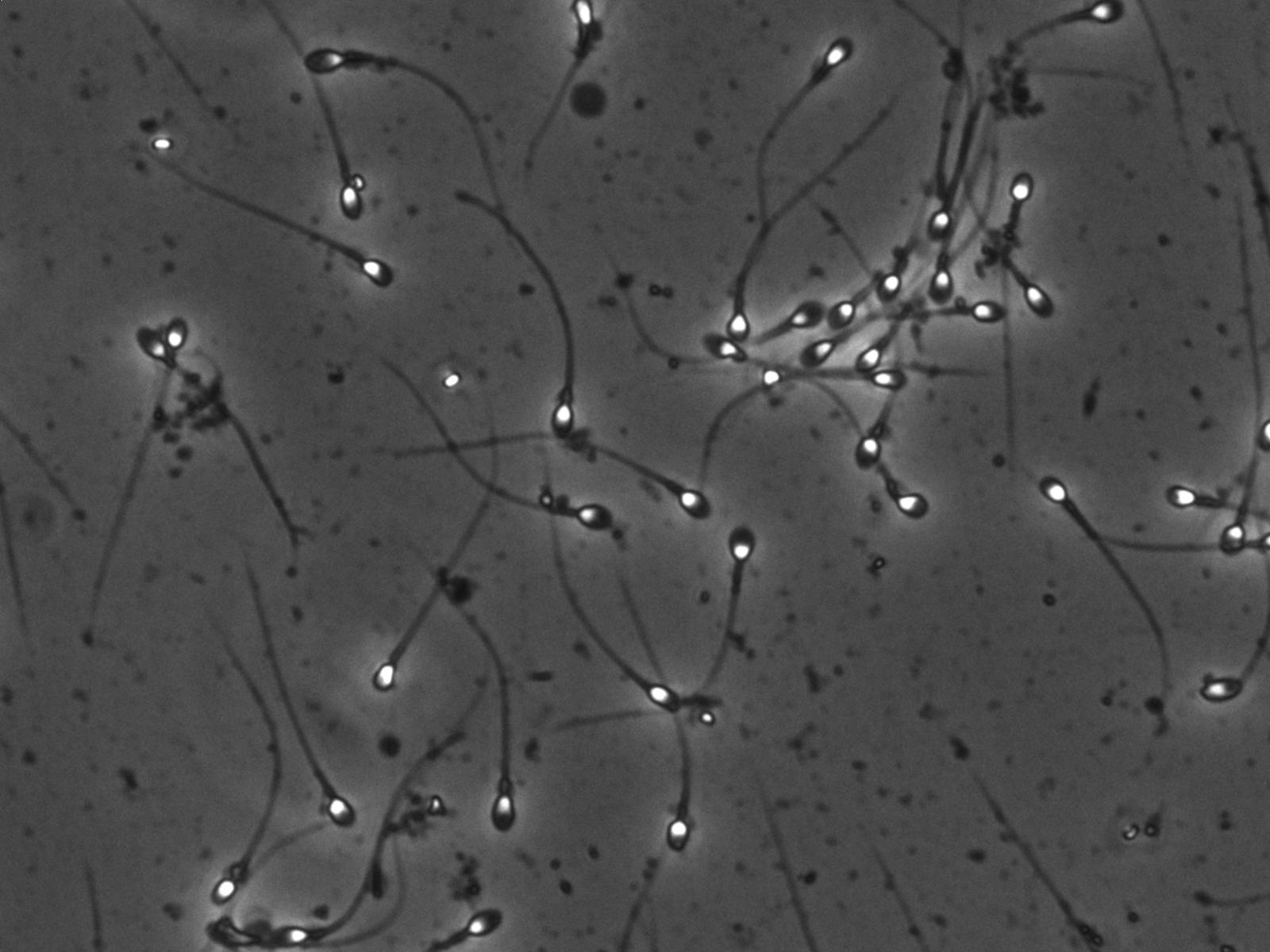
Problems with image quality, especially microscopy, will affect object recognition and therefore evaluation of every parameter. It is surprising how many centers do not offer basic microscopy training and complain of poor image quality on their CASA but simply have poorly adjusted phase contrast.
